
Speech, in its modern form, does not travel freely. It is routed through servers, logged by providers, ranked by algorithms, and quietly filed into behavioral profiles before a single person reads it. In this environment, the infrastructure carrying expression has become as consequential as the expression itself - and the tools that protect that infrastructure have become instruments of political significance. The virtual private network, long dismissed as a niche concern for the technically minded, now sits at the center of a serious and unresolved debate about who controls the conditions under which people speak.
Privacy Is Where Speech Begins
The conventional understanding of free speech focuses on the public moment: the article published, the post shared, the statement made. That framing misses where speech actually starts. Before any idea becomes public, it exists in private - tentative, unformed, and often searching. It lives in the browser tab opened at midnight, the search that goes further than one would admit, the draft never sent.
If that space is under surveillance, it changes. People do not need to be arrested for expressing unpopular ideas; they simply need to believe they are being watched. The result is self-censorship, which history has repeatedly shown to be more efficient than formal prohibition. The chilling effect requires no law to enforce it. The awareness of observation is sufficient.
This is the link that is often missing from debates about digital privacy. Privacy is not the opposite of transparency; it is the precondition for honest expression. Without a protected space to think, the public act of speaking becomes constrained not by what is forbidden but by what feels unsafe. The surveillance does not need to punish. It only needs to be present.
What a VPN Actually Does - and What It Does Not
A VPN reroutes a user's Internet traffic through an encrypted connection, masking their IP address and obscuring their activity from Internet service providers, network administrators, and, to a meaningful degree, corporate tracking systems. The key word is "obscuring," not eliminating. A VPN reduces the surface area of surveillance; it does not remove it entirely.
That distinction carries real weight. In countries where dissent carries legal consequences, VPNs are not optional features but functional necessities. Journalists communicating with sources, activists coordinating under hostile conditions, and ordinary citizens attempting to access uncensored information all depend on the basic capacity to act online without being immediately identifiable. The reach of Internet restrictions is broad: a substantial portion of the global population lives under some form of content filtering or access control, making tools that circumvent those controls essential to maintaining any meaningful contact with independent information.
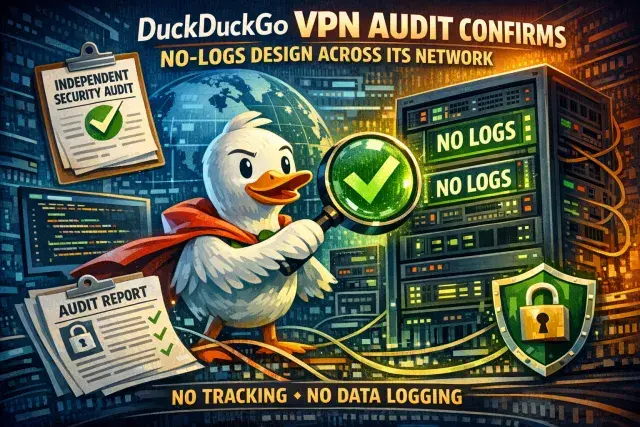
In democratic societies, the stakes look different but are not trivial. The threat is less often outright blocking and more often the quiet expansion of behavioral surveillance - laws requiring platforms to retain user data, corporate systems that build detailed profiles from browsing patterns, and algorithmic architectures that determine whose speech gets amplified and whose disappears into irrelevance. Providers operating under no-logs policies and offering features such as multi-hop routing and traffic obfuscation are responding to a genuine and documented demand: users who want their activity to remain their own business.
The limits are real, however. A VPN shifts trust from one party - the Internet service provider - to another: the VPN company itself. That shift is only meaningful if the company is genuinely trustworthy, operates under a transparent privacy policy, and is not subject to legal compulsion to hand over data. Industry audits have found significant variation in how providers handle these obligations. The market includes both rigorous operators and those whose transparency claims do not survive scrutiny.
The "Nothing to Hide" Problem
No argument against privacy tools is more persistent or more misleading than the claim that only those with something to conceal would seek them out. It sounds intuitive. It is also wrong, and the error is instructive.
Rights are not designed for the comfortable majority in ordinary times. They are designed for those who may one day find themselves on the wrong side of a shifting consensus. What is legal and acceptable speech today has not always been so, and history offers no guarantee that it will remain so. The infrastructure of privacy is what allows individuals to explore ideas, organize opposition, and communicate without preemptively judging whether their behavior will later be held against them.
The boundary between protected and punishable expression has moved in every society that has ever drawn it. The same logic applies to anonymity: the person who has nothing to hide today may have something to protect tomorrow. Privacy tools do not serve criminals disproportionately; they serve everyone who will ever be in a minority position, hold an unpopular view, or simply prefer that their thoughts remain their own before they choose to share them.
The Broader Struggle Over Who Controls the Network
The most significant shift in this space is not technological but structural. Surveillance is no longer primarily a government project. It is a business model. The modern web is built on behavioral data - the accumulation and monetization of attention, preference, and habit. Every interaction on an ad-supported platform feeds systems designed not merely to record behavior but to predict and direct it. This does not constitute censorship in any traditional legal sense, but it functions as a form of control over what people encounter, and therefore what they come to believe and eventually say.
VPNs interrupt this system by limiting the data available for correlation and profiling. Encrypted traffic cannot be easily read; masked IP addresses reduce the precision of location-based targeting; no-logs policies prevent the creation of behavioral records. The disruption is partial, not total, but it is meaningful. It reintroduces friction into a system designed to make surveillance invisible and automatic.
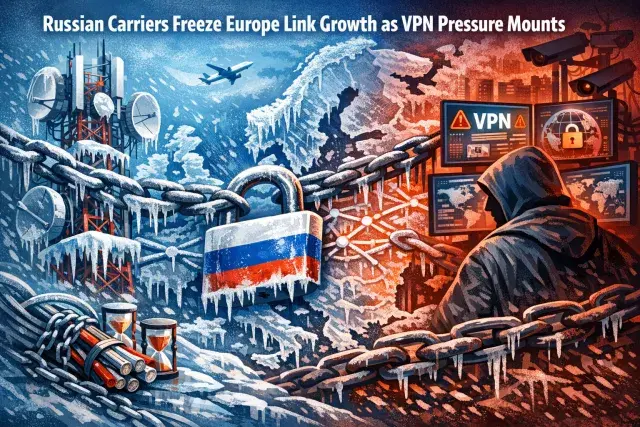
Governments, meanwhile, are developing technical and legal countermeasures. Deep-packet inspection allows network operators to identify and block VPN traffic even when its contents are unreadable. Legal restrictions on VPN use have been introduced in multiple jurisdictions. In response, providers have built obfuscation layers that disguise encrypted traffic as ordinary web browsing - an escalating technical exchange between those seeking to restrict information flows and those building tools to preserve them.
What this produces is not a stable equilibrium but a contested and shifting boundary. The default condition of the Internet - the baseline that exists without any deliberate privacy measure - is now one of observation. To use a VPN is to opt out of that default deliberately. It is to insist that the private stage of speech, the thinking, the searching, the drafting, belongs to the person doing it rather than to the systems through which it travels. That insistence is not a guarantee of free expression. But in a communications environment where surveillance is ambient and anonymity is steadily being narrowed, it may be among the few remaining practical means of defending the conditions under which genuine speech is possible.