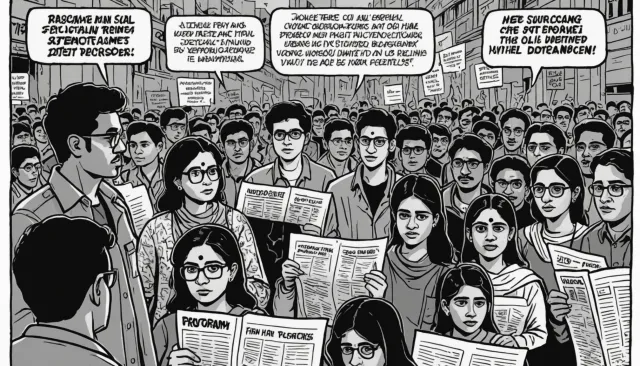
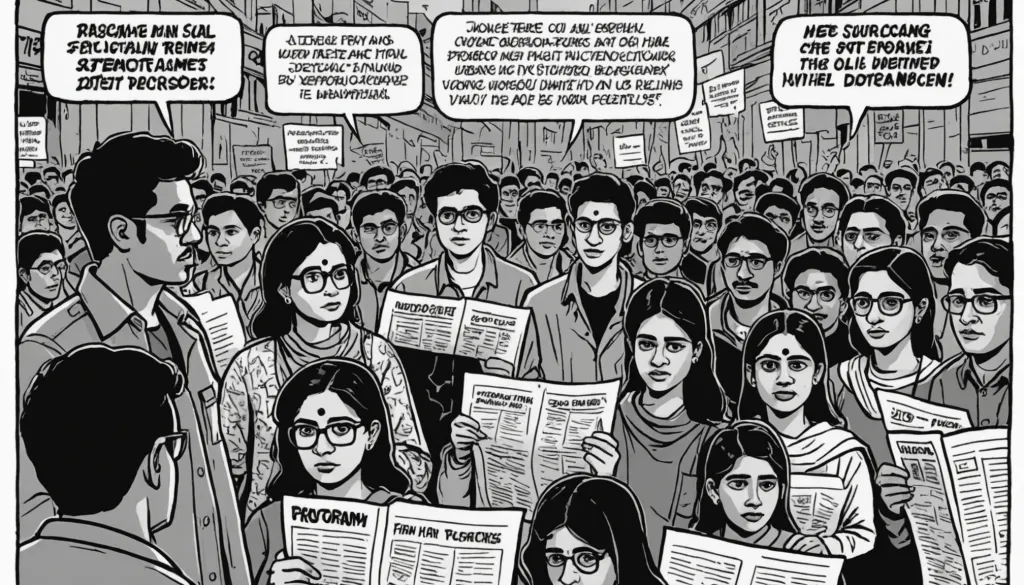
Photos and videos documenting student protests in Delhi are disappearing from feeds and discovery pages on Instagram, according to users and digital rights advocates who say Meta has offered no explanation for the pattern. The complaints, which surfaced Wednesday, come as clashes between protesters and police over alleged irregularities in the NEET-UG examination intensified in the capital, with tear gas and lathicharges reported at the demonstration site.
What users are reporting
Content creators say posts covering the protests, including clips lifted directly from television broadcasts, are being labelled "sensitive content" despite containing nothing graphic. Accounts linked to the group Cockroach Janta Party and to politician Anish Gawande were among those flagged this way. Several users told reporters that their discovery pages had stopped surfacing protest-related material altogether, even though they had been actively engaging with such content for weeks. Clicking "know more" on flagged posts, some said, still left the content inaccessible. buy vpn
Apar Gupta, founder of the Internet Freedom Foundation, described this as a partial and unsatisfying form of transparency: users can see that a restriction exists, but not why. The organisation has asked Meta directly whether any of these actions stem from legal requests by government authorities, a question the company had not answered by the time of publication.
The account suspension and Meta's response
The situation escalated Wednesday evening when Cockroach Janta Party's official Instagram account, which has roughly 25 million followers, went dark in India. Visitors to the account instead saw a message stating that Meta had complied with a legal request to restrict access. Earlier the same day, the account of CJP spokesperson Saurav Das had been suspended and then restored after Meta attributed the action to an error by its automated moderation systems.
Instagram maintains that no single algorithm governs what users see; instead, the platform relies on a mix of algorithms, classifiers and review processes tailored to different functions, from ranking content to detecting policy violations. Meta's community standards state that graphic or violent content warranting review is either removed outright or labelled with a warning, allowing users to decide whether to view it. Critics argue that in this case, the labelling appears to be applied inconsistently and without the disclosure the policy itself promises.
Why this matters beyond one protest
Platforms operating in India retain broad discretion to restrict content during periods of unrest, a power rooted in both company policy and legal obligations under India's information technology rules. But legal experts caution that opaque enforcement, absent any stated justification, sits uneasily with Article 19(1)(a) of the Constitution, which protects freedom of speech and expression. When platforms cannot say whether a takedown originates from an internal safety classifier or a government order, users are left unable to challenge or even understand the restriction.
This is not an isolated pattern. Rights groups have previously documented instances where footage of human rights concerns, later acknowledged by international bodies, was throttled or removed by major platforms before any independent verification took place. The Delhi episode adds to a growing record of disputes over how automated moderation, legal compliance and political sensitivity intersect on platforms that now function as primary channels for real-time civic documentation. Without clearer disclosure requirements, similar disputes over visibility and access are likely to recur each time online activity accompanies street-level dissent.